





Ever wondered why a burst pipe is covered by insurance, but a storm surge isn’t? The difference between water damage and flood damage is key to protecting your property. With climate change making weather patterns worse, understanding flooding damage is more important than ever.
Key Takeaways
- Flood damage is caused by external water sources like natural disasters or bad stormwater management.
- Unlike regular water damage, flooding damage isn’t usually covered by homeowner’s insurance. You need separate flood insurance.
- The big difference between water damage claims and flood damage claims is where the water comes from and if it affects nearby properties.
- Flood insurance covers damage from things like land flooding, fast water flow, and mudslides.
- There’s usually a 30-day wait before flood insurance kicks in. Buying it early is a smart move.
- Choosing a certified water damage restoration company right after damage can stop more harm and cut down on repair time.
Understanding Flooding Damage
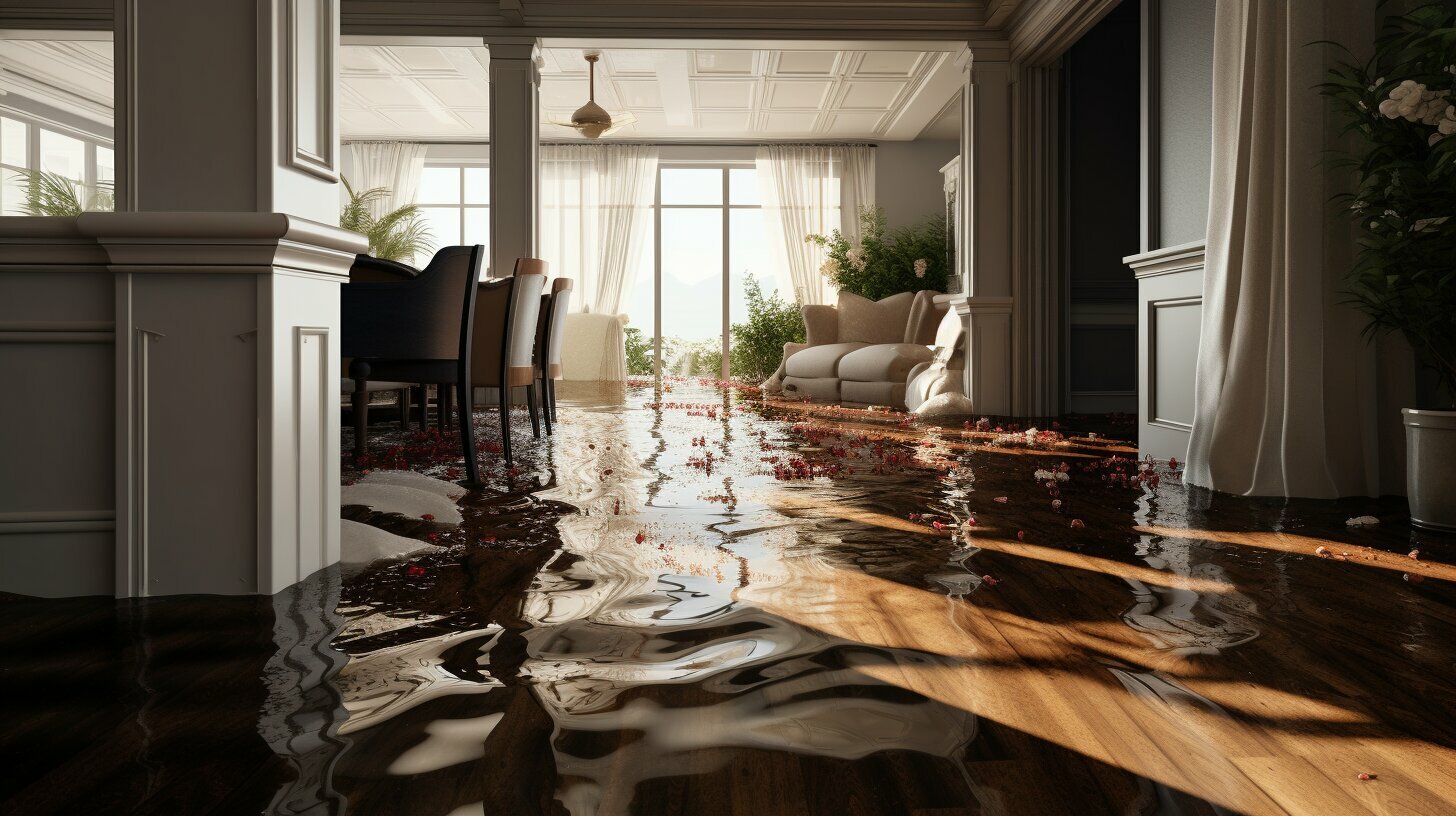
Flooding damage can severely harm properties and lives. In the U.S., areas with lots of people are at higher risk for flash floods. These floods happen because of runoff from buildings and roads.
Flash floods can change quickly. A small creek can turn into a 10-foot river in just an hour. Even dry soil can become flooded by intense rain. Burn areas and urban zones with lots of pavement also see more runoff.
Ice jams and snowmelt also cause flash floods. They raise water levels, leading to fast rises downstream. This is especially true in mountainous and urban areas.
In the U.S., 99% of counties have faced a flood in the last 20 years. Floods cause a lot of damage and financial stress. The National Flood Insurance Program (NFIP) has data on flood claims across the country.
While coastal areas have bigger flood claims, non-coastal areas also face frequent floods. FEMA and the U.S. Small Business Administration help with loans, but these loans often don’t cover all the costs. That’s why understanding flood insurance is key.
It’s important to know how to clean up after a flood. You also need to understand flood insurance. Homeowner’s insurance usually covers water damage, but not flooding. You need a special policy for that.
Dealing with insurance claims can be tricky. You need to know about deductibles and coverage limits. These details help manage the financial impact of a flood.
What is Flooding Damage?
Flood damage is when water causes a lot of harm to buildings, belongings, and roads. Storms like hurricanes and nor’easters can make this damage worse. It’s important to carefully check the damage to understand its full impact.
After a flood, cleaning up safely is the first step. Floodwater can damage electrical systems, leading to fires. It can also make water in homes unsafe, risking health. Starting repairs quickly is key because mold can grow fast, within 24 to 48 hours.
Having flood insurance is crucial. It works with homeowners’ insurance to cover damage from floods. It’s important to document damage well for insurance claims. Take photos and videos and list the damage.
Repairing flood damage means checking what’s been destroyed. Policyholders will meet with adjusters to assess the damage. Be careful not to share personal info with scammers during this time.
Preventing mold growth is also important. NFIP policies don’t cover mold if you don’t take steps to prevent it. Knowing what your insurance covers is key to recovering after a flood.
In summary, fixing flood damage requires a detailed plan. This includes assessing damage, repairing it, and using flood insurance. This approach helps property owners recover safely and quickly after floods.
Conclusion
Being aware and prepared is key to handling flood damage well. Floods are the top weather-related cause of death in the U.S. They can cause so much damage that homes and properties may not be safe to live in. Floodwaters also bring harmful molds and pollutants, which can be very dangerous to people’s health.
It’s important to know what your flood insurance policy covers. Policies like those from the National Flood Insurance Program (NFIP) are vital for damage not covered by regular homeowner’s insurance. It’s crucial to understand the difference between damage from floods and damage from things like burst pipes, which are usually covered by commercial property insurance.
Getting help from experts for property restoration quickly can help a lot. The cost of fixing and rebuilding after a flood can be very high. Businesses may also face big problems because of water damage. So, it’s important to know the flood risk in your area and get the right insurance.
Keeping up with maintenance and inspections, and having emergency plans, can help prevent water damage. Making sure your business can keep going by documenting everything and reporting claims fast can help you recover faster. Being ready and knowing about flood insurance and restoration can really help lessen the harm from floods.