





Professional flood cleanup is the structured process a restoration company uses to remove floodwater, dry out a structure, clean and sanitize affected materials, and repair damage so a property returns to its pre-loss condition. It combines specialized equipment, trained technicians, and documented steps designed to prevent long-term problems like mold growth and structural decay.
What Causes Flooding in a Home
Flooding can come from heavy rain, storm surge, or an overflowing river or stream, but it can also come from inside the home itself. Snowmelt, foundation seepage, and drainage or sump pump failure are common causes in the Denver area, especially during spring runoff. Regardless of the source, the cleanup process that follows is largely the same.
Step 1: Emergency Response and Inspection
Flood damage gets worse the longer it sits, so professional restoration companies operate on a 24/7 emergency response basis and aim to arrive within hours of the call. Once on site, technicians conduct a visual inspection of the affected areas and use moisture meters and thermal imaging cameras to identify water that has spread behind walls, under flooring, or into other hidden spaces.
This step also includes categorizing the water. Floodwater is typically treated as contaminated (often referred to as gray or black water) because it can carry bacteria, chemicals, or sewage, which affects how the rest of the cleanup is handled.
Water Damage Inc handles this initial response and inspection directly, and more detail on the process is available on the flood damage restoration service page.
Step 2: Safety Assessment
Before any equipment goes in, technicians check for electrical hazards, since water and electrical systems in close contact create a serious shock risk. They also assess structural stability, particularly in basements or areas where water has pooled for an extended period, and identify any contamination in the water that would require personal protective equipment. Utilities are shut off where necessary before work continues.
Step 3: Water Extraction and Debris Removal
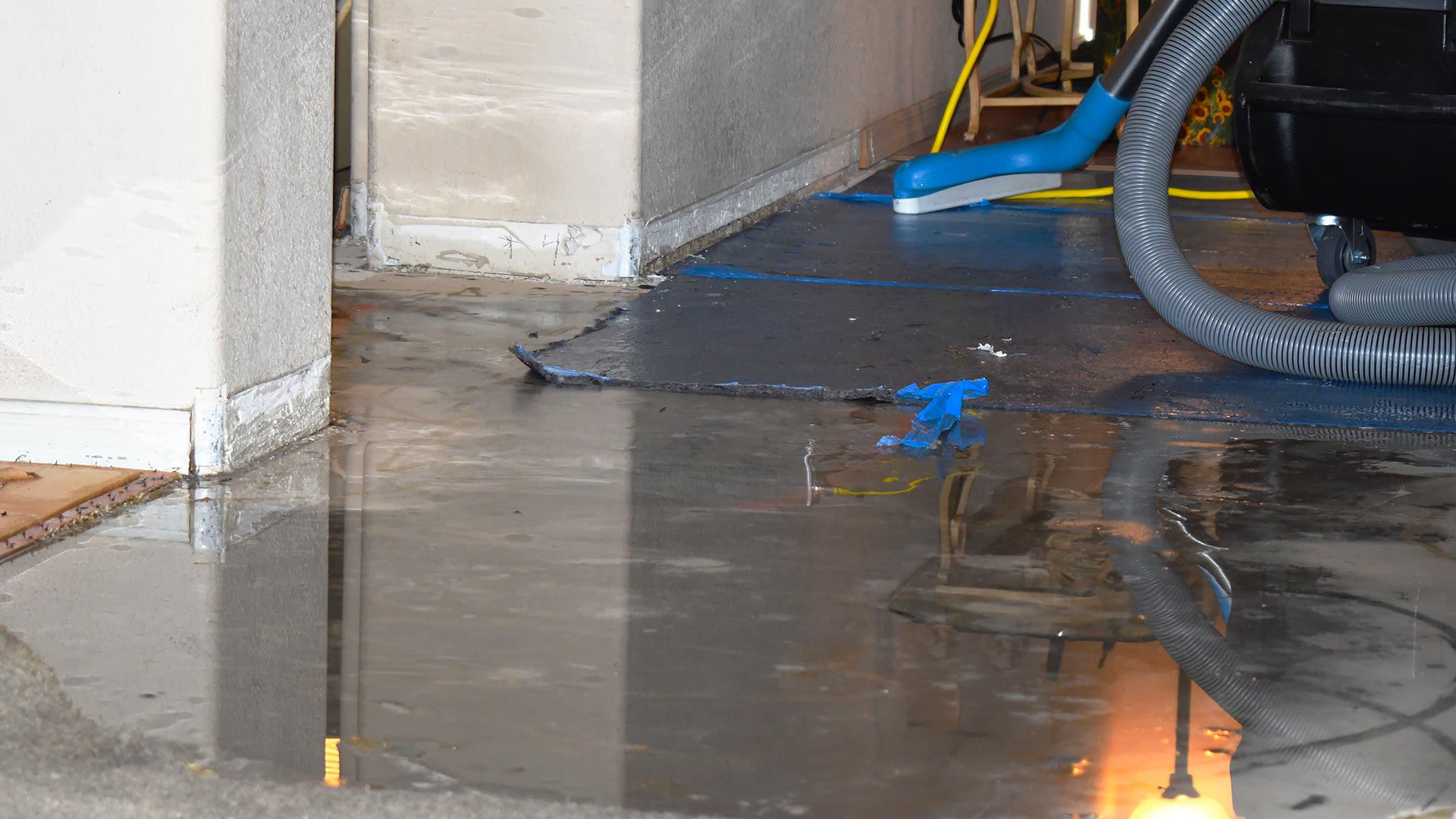
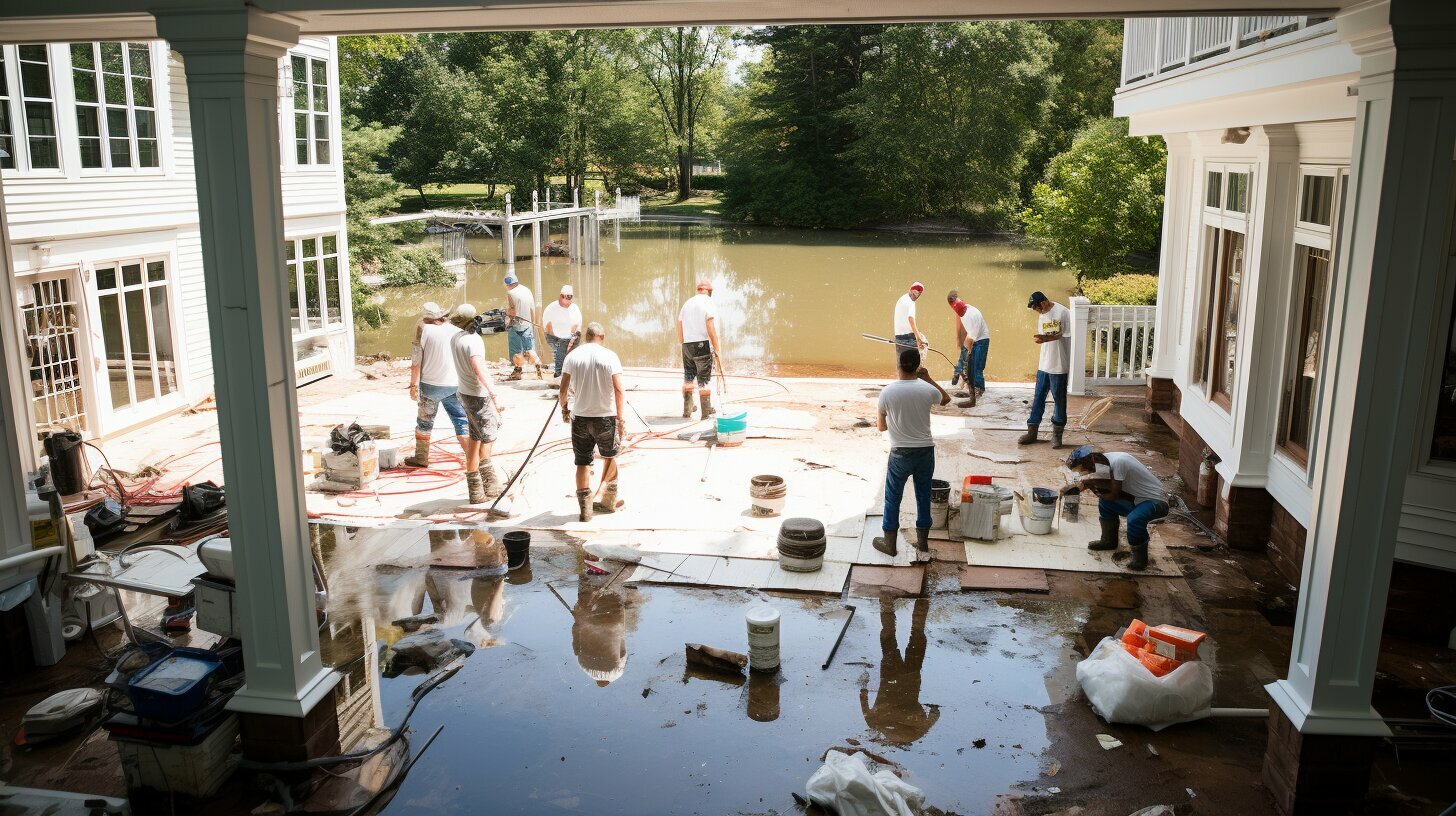
With the area assessed and safe to work in, crews use pumps and wet vacuums to remove standing water as quickly as possible. Mud, silt, and debris left behind by the flood are cleared out at the same time. Speed matters here because materials like drywall, carpet padding, and insulation begin absorbing water immediately, and the longer they stay wet, the more likely they are to require full replacement rather than drying and salvage.
Step 4: Structural Drying and Dehumidification
Once standing water is gone, the structure still holds moisture in walls, subfloors, and framing that isn’t visible to the eye. Industrial air movers and dehumidifiers are set up to pull that moisture out of the building materials and the air. Technicians monitor moisture levels throughout this stage with the same meters used during inspection, and drying continues until the materials reach an acceptable moisture level rather than a fixed number of days. Drying time varies based on how much water was involved and what materials absorbed it.
More on how this stage works is covered on the water and flood mitigation page.
Step 5: Cleaning, Sanitizing and Mold Prevention
Flood damage isn’t just about water, it’s about what the water leaves behind. Affected surfaces and materials are cleaned and treated with antimicrobial or antibacterial solutions to address contamination and prevent bacterial growth.
This step also protects against mold, which can begin growing within 24 to 48 hours of water exposure in the right conditions. Skipping or delaying sanitizing increases the risk that mold takes hold inside walls or under flooring where it isn’t immediately visible. If mold has already started, it’s addressed through mold remediation and removal rather than general cleaning alone.
Step 6: Contents Cleaning and Restoration
Furniture, electronics, documents, and other belongings affected by the flood are evaluated to determine what can be cleaned and restored versus what needs to be discarded. Salvageable items are often packed out to an off-site facility for specialized cleaning, then packed back in once the space is fully dried and repaired. This keeps personal belongings out of the way during structural drying and gives them a better chance of being restored.
Step 7: Repairs and Reconstruction
Materials that couldn’t be saved, such as soaked drywall, warped flooring, or damaged insulation, are removed and replaced. This final phase rebuilds the affected areas so the property is returned to its condition before the flood occurred, completing the restoration process.
How Insurance Fits Into the Process
Insurance coordination runs alongside the physical cleanup rather than happening after it. Restoration teams document the damage throughout the process with photos, moisture logs, and inventories of affected contents, which gives the insurance carrier the records needed to process a claim. Water Damage Inc works directly with major insurance carriers on the homeowner’s behalf, handling this documentation and communication as part of the job rather than leaving it to the homeowner to manage separately.
Why Hire a Professional Instead of DIY
Floodwater often carries bacteria and contaminants that aren’t safe to handle without the right equipment and precautions. Beyond the health risk, incomplete drying is one of the most common reasons DIY flood cleanup leads to bigger problems later. Moisture that isn’t fully removed from behind walls or under flooring can sit undetected for weeks, creating the conditions for mold growth and structural issues like wood rot. Professional equipment such as moisture meters and thermal imaging cameras catches hidden moisture that isn’t visible during a standard walkthrough, which is difficult to replicate without that equipment.
Why Choose Water Damage Inc for Flood Cleanup in Denver
Water Damage Inc is an IICRC Certified Firm and an EPA Certified Lead-Safe Firm, licensed, bonded, and insured. The company has been locally and family owned, serving the Denver community since 2018, and works directly with all major insurance carriers to coordinate claims. For a broader look at the company’s water damage services, visit the water damage restoration page.
Frequently Asked Questions
How long does professional flood cleanup take?
Timelines vary based on how much water was involved and how long it sat before cleanup began. Extraction typically happens within the first day, while structural drying can take several days to a week or more depending on the materials affected and how much moisture they absorbed.
Is floodwater dangerous to clean up myself?
Floodwater is often contaminated with bacteria, chemicals, or sewage, and it can also create electrical hazards in a home. Handling it without the right protective equipment and testing tools carries a real health and safety risk.
Will insurance cover professional flood cleanup?
Coverage depends on the specific policy and the cause of the flooding. Working with a restoration company that documents the damage and communicates directly with the insurance carrier helps support the claims process either way.
How do I know if mold has already started growing?
Mold can begin developing within 24 to 48 hours of water exposure, and it isn’t always visible right away, especially behind walls or under flooring. A musty odor or visible discoloration are common early signs, but a moisture inspection is the most reliable way to check.
What should I do before the cleanup crew arrives?
If it’s safe to do so, avoid walking through standing water, turn off electricity to affected areas if you can do so safely, and move any valuable or sentimental items out of reach of the water. Leave the extraction and drying work itself to the arriving crew.