





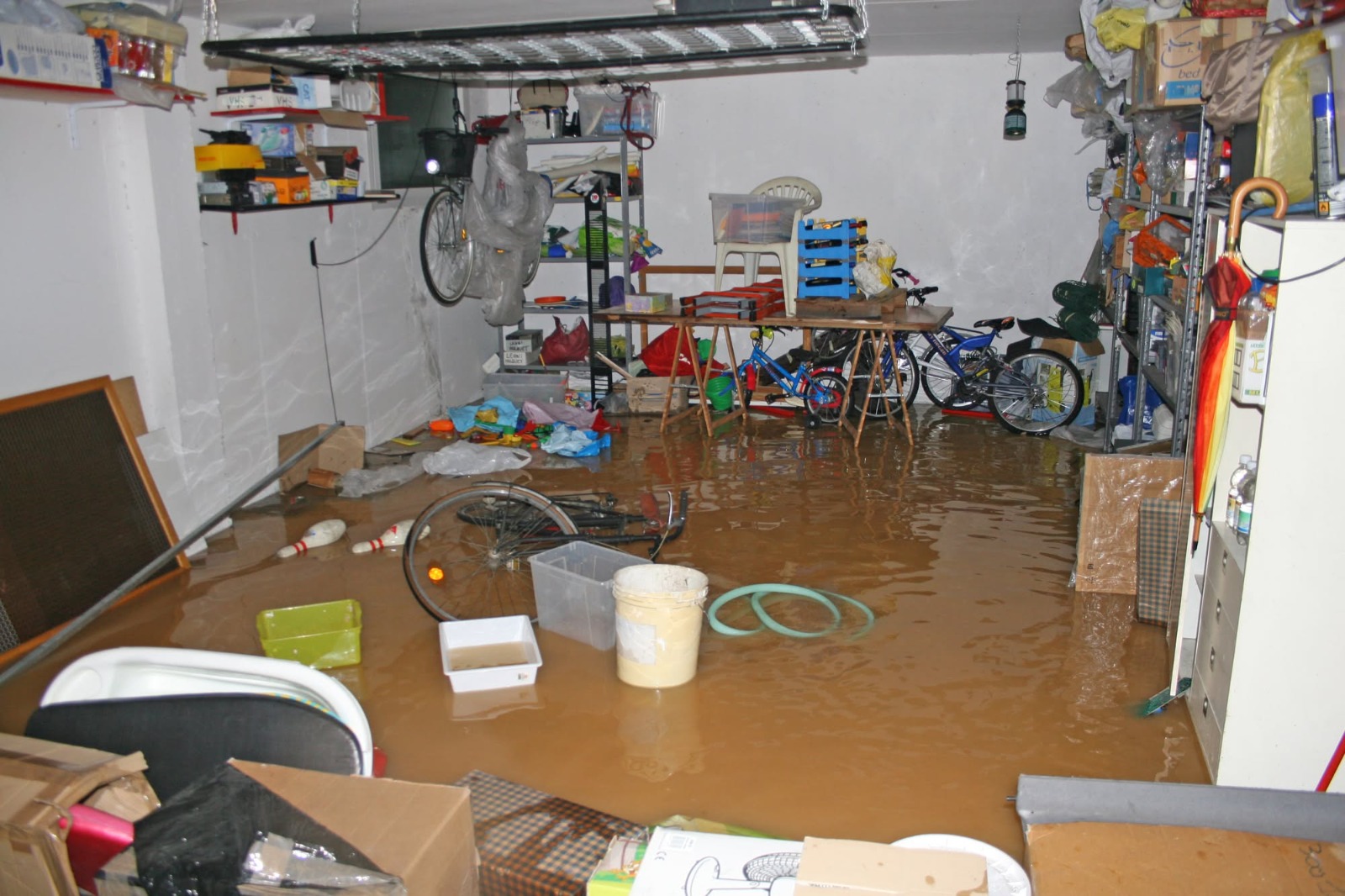
Most flood and water cleanup projects in the Denver metro area land somewhere between roughly $1,200 for a single room of clean water and well over $10,000 for a flooded basement with contaminated water. Mitigation on its own, meaning the emergency extraction and drying phase, commonly falls in the low thousands.
Those are the ranges published across the Denver restoration market, and they are worth about as much as any range that has never seen your house. The more useful question is who pays. In Denver, that depends almost entirely on what kind of water came in, and the answer surprises most homeowners. Here is how the pricing actually works and where your insurance fits. If you need help right now, our water and flood cleanup team is available 24 hours a day.
What Actually Drives the Price
Four things set the number on your estimate. Everything else is detail.
How much area got wet. This is the biggest single factor, and it is measured, not guessed. Extraction, drying, and sanitization are commonly run somewhere in the range of $3 to $8 per square foot depending on the water involved, based on figures published by restoration companies across the Denver market. A 60-square-foot bathroom and a 700-square-foot basement are not the same job.
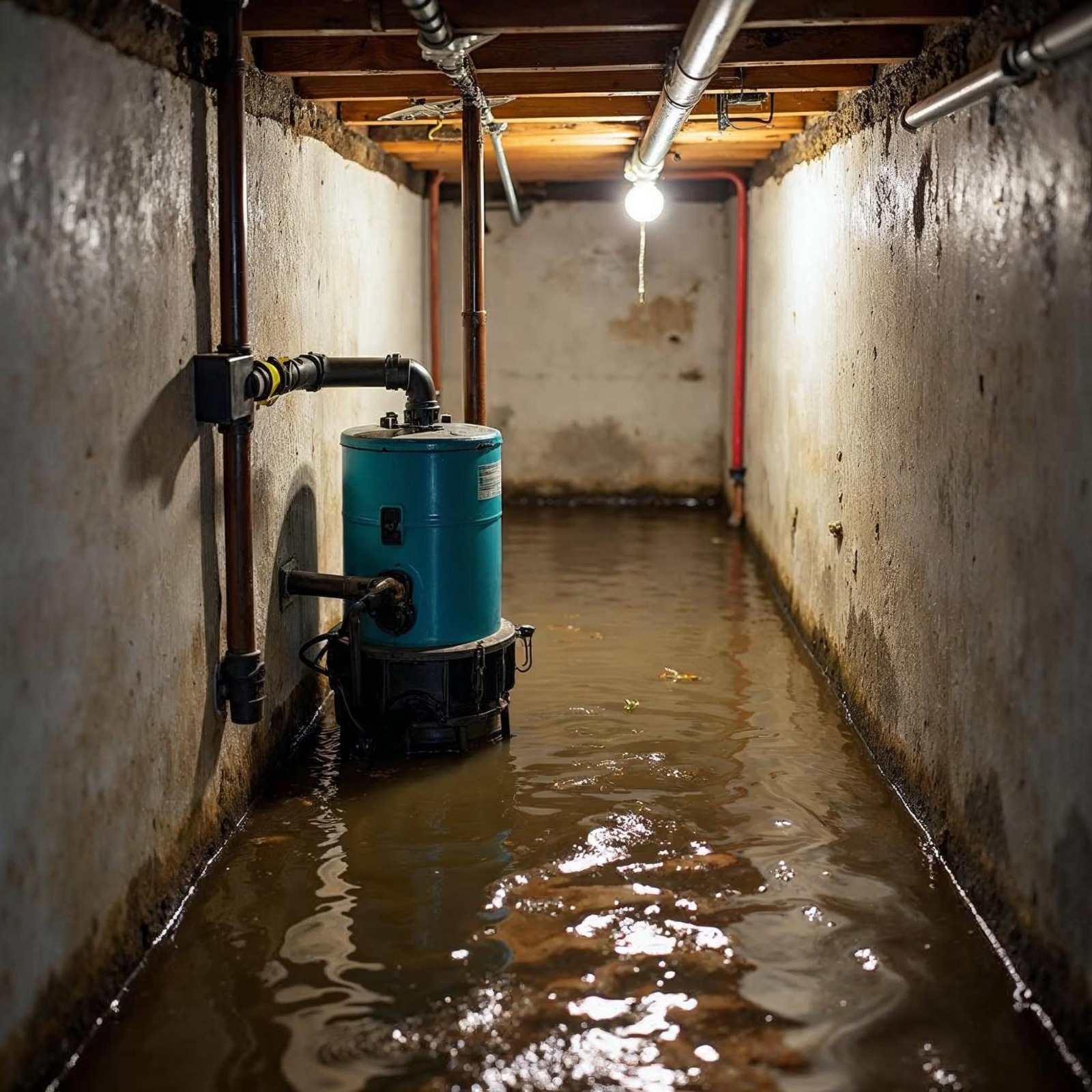
Which category of water did you have? Category 1 is clean water from a supply line or an overflowing sink. Category 2 is grey water from an appliance discharge. Category 3 is black water from a sewer backup or outdoor floodwater, and it is the most expensive because it requires protective equipment, removal of porous materials, and full disinfection. One thing worth knowing: water degrades. Clean water left sitting becomes grey, then black. The water you had on Monday is not the water you have on Thursday.
What got wet? Builder-grade carpet and drywall are inexpensive to replace. Engineered hardwood, custom cabinetry, and stone tile are not. Water that cascades from an upper floor through ceilings creates damage on every level it passes.
How fast someone responded. Every day of delay pushes water deeper into materials and expands the scope. Mold can begin within 24 to 48 hours. The real unit of cost during water and flood mitigation is equipment days, meaning how many air movers and dehumidifiers run for how long. Cutting the drying period short is the cheapest thing you can do, and calling early is what does it.
Three Kinds of Water, Three Different Policies
This is the part nobody explains, and it matters more than any number above. A wet basement in Denver is one of three separate events, and each one answers to a different insurance policy. Two of them are commonly not covered at all.
A burst pipe, water heater, or appliance failure
This is a sudden and accidental discharge from inside the home, and a standard homeowners policy usually responds. A supply line lets go on a cold January night, a water heater fails, a washing machine hose splits. You will still owe your deductible, and gradual leaks from a slow drip or deferred maintenance are typically excluded, but this is the scenario most people picture and it is the one most likely to be covered.
A sewer backup or sump pump failure
Here is where Denver homeowners get caught. Neither a homeowners policy nor a flood policy covers sewer backup or sump pump overflow. Coverage requires a separate endorsement added to your homeowners policy, and that endorsement usually carries its own dollar limit well below your main coverage. For a finished basement, this is the most common water event there is, and it is Category 3 water, which makes it one of the most expensive to clean. If this is what happened, our sewage drain and backup cleanup service is built for it.
Surface water from a storm or snowmelt
This is a flood in the insurance sense, meaning water that came in from outside. The Colorado Division of Insurance states plainly that basic homeowners insurance does not include protection from flood damage and that flood insurance must be purchased as a separate policy. That coverage comes through the National Flood Insurance Program administered by FEMA or through a private flood market. NFIP policies typically take effect 30 days after you apply and pay the first premium, so it cannot be bought once water is rising. If your basement flooded from outside water and you have no flood policy, your homeowners insurance will not respond.
Why Your Deductible May Matter More Than the Estimate
Once you know a loss is covered, run the arithmetic before you file.
Say mitigation on a wet basement comes in at $3,200 and your homeowners’ deductible is $2,500. Filing recovers $700, and in exchange a water loss goes on your property’s claims history, where it can follow you into future renewals and even into a sale. On a larger loss, the math flips completely, and filing is obviously right. On a smaller one it often is not.
We are not insurance advisors, and we cannot tell you what your policy does. What we can do is give you an itemized scope early enough that you can have that conversation with your agent before the equipment comes out, rather than after. Ask for the number first. Decide second.
Mitigation and Reconstruction Are Two Different Bills
This catches almost everyone, so it is worth stating plainly. Your project has two phases, and they are invoiced separately.
Mitigation is the emergency phase. Extraction, containment, selective removal of unsalvageable material, equipment placement, and daily monitoring until the structure reads dry. Dry is not a judgment call. It is verified with moisture meters against readings taken from unaffected areas of the same building, and that verification is what closes out the phase.
Reconstruction is everything that puts the house back. Drywall, insulation, flooring, trim, paint, and cabinetry. It is quoted separately, often approved separately by the carrier, and it typically costs more than the mitigation did. Our water and flood damage repair work covers this second phase.
Having one company handle both matters more than it sounds. When mitigation and reconstruction sit with different vendors, the documentation between them has gaps, the scopes do not always line up, and the homeowner ends up mediating.
What Makes a Denver Flood Different
The Front Range produces a specific mix of water losses.
Spring brings snowmelt running off the mountains into an already saturated water table. Summer brings fast, heavy thunderstorms that overwhelm storm drains in an afternoon. Winter brings the classic Denver loss, a supply line freezing and splitting overnight in an unheated crawlspace or exterior wall. The Colorado Division of Insurance also notes that wildfire leaves ground unable to absorb water and that elevated flood risk can persist for up to five years after a fire, which matters for anyone living below a burn scar.
One local factor works in your favor. Denver’s dry air and altitude mean that, under the right conditions, structures can release moisture faster here than in a humid climate, which can shorten the drying period and reduce equipment days. That is a real advantage and not a guarantee. Moisture trapped behind a wall or under a floor does not care what the outdoor humidity is, which is why secondary damage and mold remediation remain a risk in Denver just as they are anywhere else.
What If Insurance Does Not Cover Any of It?
If outside water came in and you do not carry flood coverage, this is the likely outcome, and you deserve a straight answer rather than a hopeful one.
Federal disaster assistance exists, but it is limited. It requires a declaration that many flooding events never receive, and what is available often takes the form of a loan that has to be repaid rather than a grant. It is not a substitute for insurance, and it is not something to plan a restoration around.
Three practical things. First, get the mitigation done anyway. Water left in place multiplies the eventual cost, and a covered problem today becomes an uncovered mold problem in two weeks. Second, ask for an itemized scope so you can decide what to do now and what to defer. Third, if cash flow is the obstacle, we offer financing options specifically for situations where a claim has been denied or the work falls outside what a policy covers. Monthly payments, a 60-second pre-qualification, and no effect on your credit score to check.
How to Read a Flood Cleanup Estimate
A number spoken out loud in your driveway is not an estimate. A written scope should show all of the following, and if it does not, ask why.
- The affected area, measured. Square footage per room, not a guess from the doorway.
- The water category. Category 1, 2, or 3, stated explicitly, because it drives the entire protocol.
- Equipment counts and expected days. How many air movers, how many dehumidifiers, and how long do they run.
- Material removal scope. Which flooring, drywall, and insulation are coming out, and how far up the wall.
- Whether reconstruction is included. It usually is not. Confirm it in writing rather than assuming.
- Who is billing whom. Whether the company bills your carrier directly or you pay and get reimbursed.
Getting a second estimate is reasonable, and no legitimate company will be offended by it. What you should not do is wait several days to collect three of them while the water sits.
Get a Free Estimate in the Denver Metro Area
Water Damage Inc. has served the Denver community since 2018. We are locally and family owned, founded by partners with more than 50 years of combined mitigation, restoration, and construction experience, and we are licensed, bonded, insured, and an IICRC Certified Firm. We respond 24 hours a day, provide free estimates, work directly with insurance carriers, and offer financing when a claim falls short. To get a real number for your property instead of a range from the internet, request a free estimate or call (303) 731-1200.
Frequently Asked Questions
Does homeowners insurance cover flood damage in Colorado?
No. The Colorado Division of Insurance states that basic homeowners insurance does not include protection from flood damage and that flood insurance must be bought as a separate policy through the National Flood Insurance Program or a private insurer. NFIP coverage typically takes effect 30 days after the first premium is paid.
How much does it cost to clean up a flooded basement in Denver?
Published ranges across the Denver market run from roughly $1,200 for a small clean-water loss to over $10,000 for a large basement with contaminated water. The variables are square footage, water category, materials, and response time. Only an on-site assessment produces a number you can rely on, and ours are free.
How long does flood cleanup take?
Structural drying commonly takes 3 to 5 days for a straightforward loss and longer where water reaches subfloors, wall cavities, or multiple levels. That is mitigation only. Reconstruction afterward can run from several days to several weeks depending on how much material has to be replaced.
Is sewer backup covered by flood insurance?
No, and it is not covered by a standard homeowners policy either. Sewer backup and sump pump overflow require a specific endorsement added to your homeowners policy, usually with its own dollar limit. Check your declarations page, because this is the most common basement water event in Denver.
What areas around Denver do you serve?
We cover the Denver metro area and the surrounding Front Range from our facility on St Paul Street, including Aurora and Lakewood, along with Arvada, Littleton, Thornton, Westminster, Centennial, Highlands Ranch, Englewood, Golden, and Boulder.